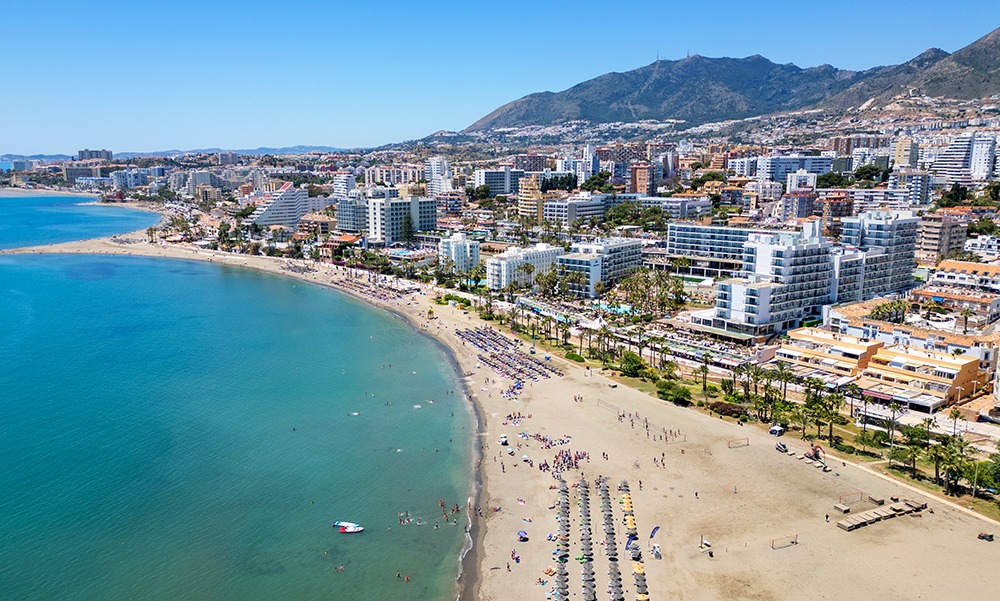
Extensions of concessions along the Spanish coastline are under European pressure. Following several rulings inspired by the case law of the European Court of Justice and infringement proceedings brought by the European Commission, the Spanish Government is preparing to reform the coastal regulations to require prior tendering for their award and extension.
For a nation with a coastline of considerable length, where a large share of the wealth and population that is not concentrated in the capital tends to cluster, Spain has traditionally maintained a highly complex relationship with the legal regime governing its coast.
The entry into force of the Coastal Act in 1988 was already a complex moment that gave rise to difficult legal situations, both for owners of properties on the coast and for the authorities responsible for its management. This led to a burdensome and arbitrary application of the Act which, despite being theoretically a progressive piece of legislation ahead of its time, in practice generated serious legal uncertainty and, worse still, failed to protect the natural values it was meant to safeguard.
EU institutions have traditionally been highly sceptical of the coastal protection regime in Spain. Particularly notable is the Auken Report (2009), which highlighted, on the one hand, the devastated state of the Spanish coastline and, on the other, the high degree of legal uncertainty and arbitrariness generated by the Coastal Act.
Against this backdrop, faced with the prospect of the mass expiry of the concessions that had replaced properties affected by the delimitation of the maritime-terrestrial public domain (most of which were due to lapse in 2018), the Spanish Government approved Act 2/2013 of 29 May on the protection and sustainable use of the coastline, allowing the extension of concession titles.
In implementation of this Act, the General Regulations of the Coastal Act were adopted through Royal Decree 876/2014 of 10 October, which set out the applicable regime in greater detail. This Royal Decree was subsequently amended by Royal Decree 668/2022 of 1 August, which introduced measures related to adapting the Coastal Act regime to climate change; this latter decree was declared null and void by the Supreme Court ruling of 31 January 2024.
The extension regime established under the 2013 Act gave rise to problems very shortly after its introduction.
On the one hand, the Directorate General for Coastal Affairs of the Spanish Government applied the Act in an extremely restrictive manner when issuing reports in concession extension proceedings. That Directorate General took the view that, for a concession to be eligible for extension, the use and construction covered by it had to comply with the requirements of the Coastal Act for the award of a new concession. Fortunately, this interpretation was overturned by the Supreme Court which, in its ruling of 17 July 2025, clarified that granting an extension means prolonging a pre-existing situation in time, not creating a new legal situation.
On the other hand, in this same context of concession extensions, on 14 July 2016 the European Court of Justice (ECJ) handed down its judgment in the case of Promoimpresa srl and others v Consorzio dei comuni della Sponda Bresciana del Lago di Garda e del Lago di Idro and others.
In that judgment, the ECJ declared that the automatic extension of concessions over a scarce resource such as the coastline is incompatible with Article 12 of Directive 2006/123/EC (the Services Directive).
This ruling has had a very significant impact on national law, serving as the basis for other judgments that have declared the extension of maritime-terrestrial concessions null and void, such as the ruling of the Superior Court of Justice of Catalonia of 23 June 2020.
Both the ECJ ruling and the European Commission’s assessment of the application of the Coastal Act prompted the opening, in 2021, of infringement proceedings by the Commission against Spain, in which a reasoned opinion was issued on 16 December 2024.
To avoid the imposition of a penalty against Spain, within the framework of various meetings between the Ministry for Ecological Transition and Demographic Challenge and the European Commission, the Government has committed to amending the General Regulations of the Coastal Act, so that concessions may not be awarded without a prior tendering process. This restriction will evidently also affect, and particularly so, the extension of concessions.
The public consultation period prior to the drafting of the Regulations closed on 19 February. The Ministry must now prepare the text of the amendment to said Regulations. The precise content remains unknown, but given all the background described above and under the threat of infringement proceedings against Spain, it is practically certain that, once this amendment to the Regulations is approved, the extension of maritime-terrestrial public domain concessions will become virtually impossible.
The impact this Regulation will have on the already precarious situation of so many concession-based activities in Spain will be very difficult to absorb. The regulatory framework will continue to mistreat and subject these activities and facilities to a regime of precariousness that sits poorly with the ambition to offer high-quality, attractive services that are mindful of their environmental impact.
Perhaps the time has come for a renewal of the legal regime governing Spain’s coastline — one that is better suited to the diversity the coast presents and to the various concurrent regional competences, that provides greater legal certainty, and that focuses on the use of urban planning techniques for determining land uses and impact assessment, areas in which both the Government and the regional communities have achieved outstanding results.